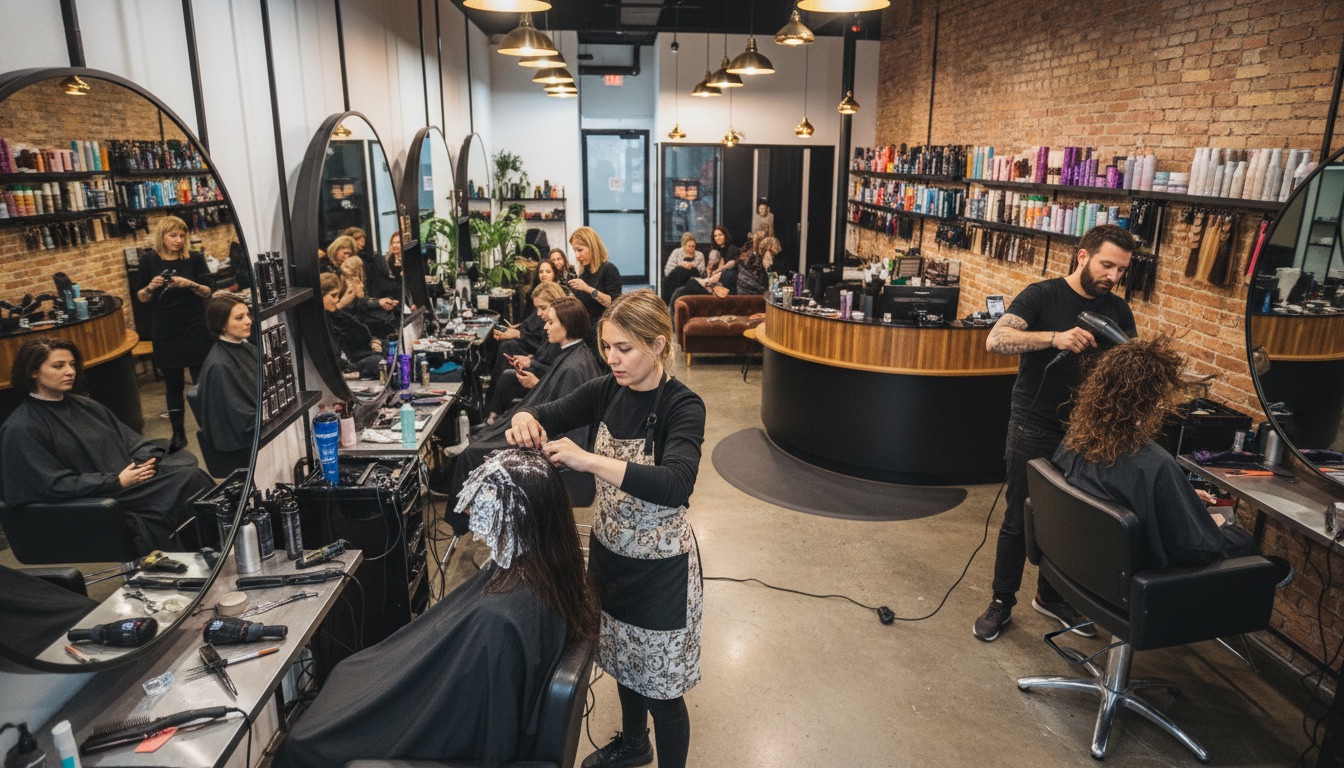
With one salon, you are the system. You see who's running late, you settle the argument at the front desk, you notice when color stock is low. The day you open a second location, you can't be in both places — and every habit that lived in your head has to become a rule, a report, or a person.
Here's how to set that up so location two makes you money instead of doubling your headaches.
What changes when you open a second location
Three things change at once:
- You're not at the front desk anymore. At least not at both. Anything that relied on you watching — turns, discounts, who's allowed to change the schedule — needs a rule and someone to enforce it.
- Every decision doubles. Prices, services, cancellation policy, hiring. You'll need to decide what stays the same everywhere and what's allowed to differ.
- Staff start moving between shops. A stylist covers a Saturday at the new location, a manager splits her week. That's efficient, and it's also where scheduling and payroll mistakes come from.
The rest of this guide takes those one at a time.
One account, or a separate account for each location?
The first real decision is how your software is set up. Many owners start location two by opening a second account. It works — until it doesn't:
| Separate account per location | One account with multiple locations |
|---|---|
| Separate logins and passwords for each shop | One login; switch locations in a click |
| Separate bills | One bill |
| A stylist who works at both needs two logins | One staff member, set up at both locations |
| Reports live in different places | Each location's reports in the same place |
In SupaDay, every location runs under one account on the Business plan, with no per-location fee. Each location still gets its own calendar, staff list, services, clients, settings, and booking page, so the downtown shop doesn't see the westside shop's data.
One practical note: because each location keeps its own client list, a regular who visits both shops will have a record at each. For most owners that's a feature — each shop's list stays clean — but tell your front desk so nobody's surprised.
How do I manage staff who float between locations?
Give each floating staff member a separate schedule at each location, with hours that never overlap. Set their role and commission rate per location, pick one location as their home base, and add up their hours from every location before payroll.
That's the whole answer. Here's why each piece matters:
Separate hours per location, never overlapping. Double-booking is the classic floating-staff mistake: a client books Sarah at 2:00 downtown while she's already booked at 2:00 at the beach location. The fix is in the schedule itself. In SupaDay, each staff member's working hours are set per location — Sarah can work Mondays downtown and Saturdays at the beach — and she's only bookable at a location during the hours she works there. Keep those hours from overlapping and she can't be offered at two places at once.
A different role at each location. Your best stylist might be the manager at the new shop and a regular stylist at the original one. SupaDay lets you set a separate role per location, so her manager access only applies where she's actually managing.
A different commission rate at each location. It's common to pay more at a new location to attract talent, or to set different rates where prices differ. Each location can have its own rate for the same person — covered in the next section.
One home base. Pick the location where a floater requests time off and gets reviewed. Without one, two managers each assume the other one approved it.
Turns stay local. If your shops run a walk-in rotation, each location has its own. A floating tech joins the rotation at whichever shop she's working that day — see how to track turns in a nail salon for how the rotation works.
Commissions and pay across locations
Rates can differ by location. A stylist might earn 45% downtown and 50% at the newer shop. In SupaDay, commission tracking is set up separately at each location — flat rate, product rate, hourly rate, and per-service overrides — so the right rate applies automatically depending on where she did the service.
Tips belong to the location where they were earned. Record them there, and report them there.
Payroll has to combine locations. This is the one that catches people. SupaDay reports each location separately, so for a floating staff member you'll add her totals from each location before paying her.
Overtime counts across locations. Under federal wage law, hours an employee works for the same employer are generally added together for the workweek — regardless of which location they worked at.
| Location | Hours this week |
|---|---|
| Downtown | 25 |
| Beach | 20 |
| Total | 45 — 5 hours of overtime |
Neither location's report shows overtime on its own. The combined total does. Owning each shop through a separate LLC doesn't automatically change this either — businesses under common ownership and control are often treated as one employer. Confirm your specific setup with a CPA or employment attorney, and if you pay techs on commission, read what happens if you misclassify a nail tech for how overtime and minimum wage are counted.
Keep services, prices, and policies consistent — on purpose
Decide up front what's the same everywhere and what's allowed to differ:
| Keep the same everywhere | Fine to differ by location |
|---|---|
| Service names and what each includes | Prices (different neighborhoods, different rents) |
| Cancellation and no-show policy | Hours of operation |
| How turns and requests are handled | Which services are offered |
| Brand, tone, and client experience | Staff and commission rates |
In SupaDay each location has its own service menu and prices, so a $65 gel set downtown can be $55 in the suburbs without any workaround. Write the "same everywhere" column down in one shared policy document so each manager is enforcing the same rules.
How do I track how each location is doing?
Look at each location's numbers side by side every week — the same handful of numbers, every time. Trends matter more than any single week.
| Number | Why it matters |
|---|---|
| Revenue | The headline — but not enough on its own |
| Revenue per staff member | Shows whether a location is busy or just big |
| Tips | A rough read on client satisfaction |
| Rebooking rate | Whether clients come back to this location |
| No-shows | Often a sign of reminder or policy problems at one shop |
SupaDay's revenue reporting shows revenue, tips, and staff performance for each location. Reports are per location — switch locations and the numbers update — so you can compare shops side by side without merging spreadsheets.
Put a manager in charge of each location
Your job moves from running a salon to running the people who run salons. Each location needs one person who owns its day:
- The manager owns: opening and closing, the front desk, the schedule, the walk-in rotation, and first response to client complaints.
- You keep: pricing, hiring and firing, commission rates, and the weekly numbers review.
Give that person real authority in your software, not just a title. In SupaDay, you can make someone a manager at one location and a regular stylist at another, so their access matches their actual job.
What to look for in multi-location salon software
Whatever you use, check it against this list before you open location two:
- One login for every location, with one-click switching
- Staff who can work at more than one location, with different hours, roles, and pay at each
- Commission rates set per location
- A separate booking page for each location, so clients book the right shop
- Reports for each location
- Pricing that doesn't charge per location — some tools charge per location per month, which gets expensive fast. Square Appointments, for example, bills $49 or $149 per location.
SupaDay's Business plan covers all of it: unlimited locations under one account, $22 per staff member per month, capped at $149/month total no matter how many locations you add. Each location also gets its own online booking page and check-in QR code.
The bottom line
A second location works when the things you used to do by being there become systems: one account, a manager per shop, written policies, weekly numbers, and a clear setup for staff who float — separate hours, separate pay rates, and hours added together before payroll.
Get those in place before you open, and location two runs without you standing in it. See how SupaDay handles multiple locations →